Table of contents
- What Are Affiliate Marketing Payment Models?
- Why Payment Models Matter in Performance Marketing?
- Benefits of Affiliate Marketing Payment Models
- What Is CPA Marketing (Cost Per Action)?
- How CPA Marketing Works
- What Is CPL Marketing (Cost Per Lead)?
- How CPL Marketing Works
- What Is CPI Marketing (Cost Per Install)?
- How CPI Marketing Work
- What Is CPR Marketing (Cost Per Registration)?
- How CPR Marketing Works
- CPA vs CPL vs CPI vs CPR: Key Differences
- Which Affiliate Marketing Payment Model Is Best for Your Business?
- How to Improve Performance Across All Affiliate Marketing Models
- Why Performance Marketing Agencies Help Advertisers Scale Faster
- Benefits of Working With a Performance Marketing Agency
- Conclusion
Affiliate Marketing Payment Models
Affiliate marketing has transformed the way businesses acquire customers.
Instead of spending large budgets on advertising with uncertain outcomes, brands today rely on performance marketing models that ensure they pay only when specific results are achieved.
Whether it’s generating a lead, driving an app install, securing a registration or completing a desired action, affiliate marketing payment models provide advertisers with measurable and scalable ways to grow their business.
For publishers and affiliate marketers, these models create opportunities to monetize traffic based on performance rather than impressions alone.
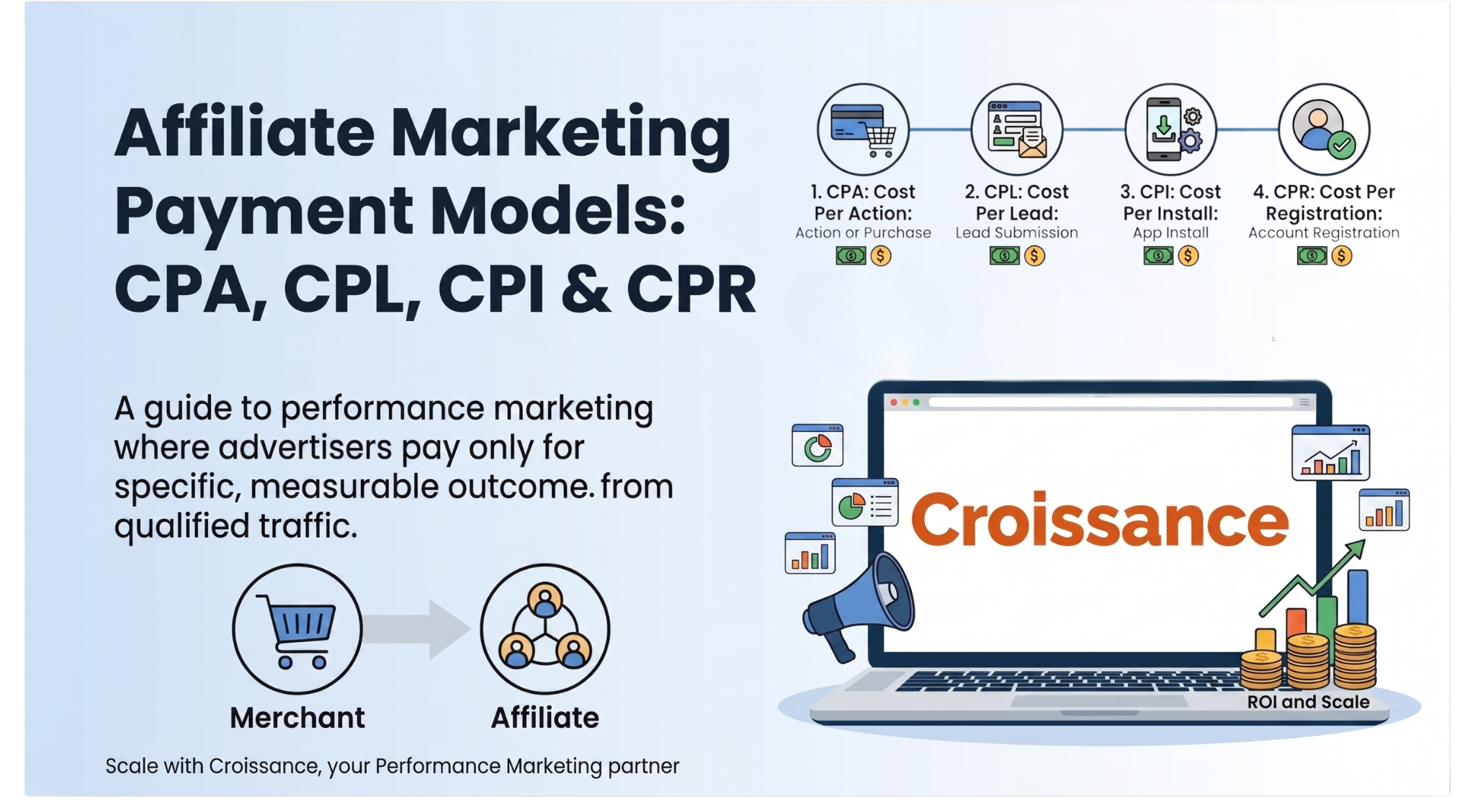
Among the most widely used affiliate marketing payment models are CPA (Cost Per Action), CPL (Cost Per Lead), CPI (Cost Per Install) and CPR (Cost Per Registration).
Understanding how these models work is essential for advertisers, affiliate marketers and brands looking to maximize ROI while maintaining efficient customer acquisition costs.
What Are Affiliate Marketing Payment Models?
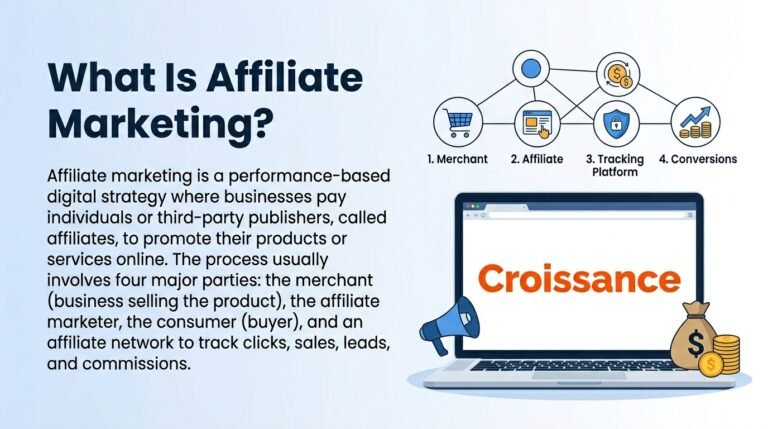
Affiliate marketing payment models specify how advertisers pay affiliates or publishers for achieving targeted user actions.
Unlike traditional advertising methods that charge for impressions or clicks performance marketing focuses on measurable outcomes.
In simple terms, advertisers only pay when a user completes a specific action.
These actions can include:
- Filling out a lead form
- Installing an app
- Registering an account
- Making a purchase
- Subscribing to a service
Why Payment Models Matter in Performance Marketing?
The payment structure directly impacts campaign profitability, risk levels and scaling potential.
For advertisers, choosing the right model helps control acquisition costs and improve marketing efficiency.
For affiliates, selecting suitable campaigns can significantly increase earnings and conversion rates.
Benefits of Affiliate Marketing Payment Models
For Advertisers
- Lower financial risk
- Better campaign tracking
- Measurable ROI
- Scalable customer acquisition
- Increased marketing efficiency
For Affiliates
- Performance based earnings
- Access to diverse campaigns
- Flexible traffic monetization
- Opportunity to scale revenue
As the affiliate marketing industry continues to grow globally, performance-based compensation models remain at the center of successful affiliate marketing campaigns.
What Is CPA Marketing (Cost Per Action)?
In this model, advertisers pay affiliates only when a user completes a predefined action.
The action can vary depending on campaign objectives, CPA is one of the most popular and widely adopted affiliate marketing payment models because it aligns advertiser spending directly with results.
How CPA Marketing Works
The process is straightforward
- Advertiser launches a CPA campaign.
- Affiliate promotes the offer.
- User completes the required action.
- Affiliate earns a commission.
Since payment occurs only after the desired action is completed, CPA marketing is considered highly performance driven.
Real-World Example
A streaming platform may pay affiliates $20 whenever a user subscribes to a premium plan.
If an affiliate drives 100 successful subscriptions, they earn $2,000.
Advantages of CPA Marketing
For Advertiser
- High ROI potential
- Reduce wasted ad spend
- Predictable acquisition cost
- Strong conversion focus
For Affiliate
- High commission payouts
- Access to premium offers
- Scalable earning opportunities
Challenges of CPA Marketing
- Higher conversion difficulty
- Longer customer journey
- More competition among affiliates
- Requires optimized traffic sources
What Is CPL Marketing (Cost Per Lead)?
CPL marketing stands for Cost Per Lead.
Under this model, advertisers pay affiliates when a user submits their information and becomes a lead.
Unlike CPA campaigns, a purchase is not required.
CPL is commonly used in lead generation marketing campaigns where businesses aim to build a pipeline of potential customers.
How CPL Marketing Works
- Affiliate promotes an offer.
- User completes a lead form.
- Information is submitted.
- Affiliate receives payment.
The advertiser can then nurture the lead through email marketing, sales outreach or remarketing efforts.
Industries That Use CPL Campaigns
CPL marketing is especially common in:
- Insurance
- Real estate
- Education
- B2B services
- Financial products
- Home improvement services
Example
An insurance company may pay affiliates $15 for every qualified quote request submitted through its website.
Advantages of CPL Marketing
For Advertisers
- Reduced acquisition costs
- Consistent lead generation
- Easy scalability
- Improved sales funnel development
For Affiliates
- Broad offer availability
- Easier conversion
- Faster payout
Challenges of CPL Marketing
- Lead quality concerns
- Fraud prevention requirements
- Lower payouts than CPA
- Need for lead validation processes
What Is CPI Marketing (Cost Per Install)?
CPI marketing stands for Cost Per Install.
This model is primarily used in mobile app marketing campaigns.
Advertisers pay affiliates each time a user successfully installs their mobile application.
With global app downloads reaching hundreds of billions annually, CPI marketing remains a key customer acquisition channel for app developers.
How CPI Marketing Work
- Affiliate promotes an app
- User clicks the install link
- App install is completed
- Affiliate earns a commission
The installation should usually be confirmed using a mobile attribution platform.
Why Mobile App Advertisers Prefer CPI
Mobile app companies focus on achieving growth as a top priority.
CPI campaigns help them:
- Increase app downloads quickly
- Improve app store rankings
- Expand user acquisition efforts
- Scale globally
Example
A gaming company may pay affiliates $2 per app install.
Generating 10,000 installs would result in a $20,000 payout to affiliates.
Advantages of CPI Marketing
For Advertisers
- Rapid user acquisition
- Scalable campaign growth
- Increase app visibility
For Affiliates
- Easier conversion process
- High volume opportunities
- Strong mobile traffic monetization
Challenges of CPI Marketing
- User retention concerns
- Install fraud risks
- Lower payouts per conversion
- Requires quality mobile traffic
What Is CPR Marketing (Cost Per Registration)?
CPR marketing stands for Cost Per Registration.
Advertisers pay affiliates when users complete a registration process.
The user typically creates an account but does not need to make a purchase.
How CPR Marketing Works
- Affiliate promotes the registration offer.
- User completes the signup process.
- Registration is verified.
- Affiliate receives compensation.
Popular Industries Using CPR Campaigns
CPR campaigns are common in
- Gaming
- Dating platforms
- Streaming services
- Online communities
- Cryptocurrency platforms
- Financial application
Example
A fintech platform may pay affiliates $8 for each verified user registration.
Advantages of CPR Marketing
For Advertisers
- Rapid user base growth
- Increased platform adoption
- Strong top of funnel acquisition
For Affiliates
- Easier conversion path
- Consistent earning potential
- Suitable for broad audiences
Challenges of CPR Marketing
- Registration quality issues
- Fake account risks
- User engagement concerns
CPA vs CPL vs CPI vs CPR: Key Differences
Choosing the right affiliate marketing payment model depends on campaign objectives and desired outcomes.
Factor | CPA | CPL | CPI | CPR |
Payment Trigger | Action or Purchase | Lead Submission | App Install | Registration |
Risk Level for Advertiser | Low | Medium | Medium | Medium |
Conversion Difficulty | High | Medium | Low | Low-Medium |
Typical Industries | E-commerce, SaaS | Insurance, Finance | Mobile Apps, Gaming | Fintech, Communities |
Payout Size | Highest | Moderate | Lower | Moderate |
Customer Intent | High | Medium | Low-Medium | Medium |
Best Use Case | Revenue Generation | Lead Generation | App Growth | User Acquisition |
Quick Summary
- CPA focuses on completed actions.
- CPL focuses on lead generation.
- CPI focuses on app installs.
- CPR focuses on registrations.
Each model serves a different stage of the customer acquisition funnel.
Which Affiliate Marketing Payment Model Is Best for Your Business?
There is no universal answer.
The ideal model depends on your goals.
Choose CPA If
- Revenue is the primary objective
- You want maximum ROI visibility
- Sales are your core KPI
Choose CPL If
- You need qualified leads
- You have a strong sales team
- Lead nurturing is part of your strategy
Choose CPI If
- You are promoting a mobile app
- User acquisition is the priority
- App growth is your key metric
Choose CPR If
- Platform growth matters most
- Building a user database is important
- Registrations are a primary KPI
How to Improve Performance Across All Affiliate Marketing Models
Regardless of the model you choose, campaign optimization is critical.
Work With High-Quality Traffic Sources
Not all affiliate traffic delivers the same results.
Focus on:
- Trusted publishers
- Niche audiences
- Relevant traffic channels
- Verified affiliate partners
Implement Accurate Tracking
Reliable attribution ensures every conversion is properly recorded.
Track:
- Clicks
- Conversions
- Revenue
- Customer quality
Optimize Landing Pages
Even the best traffic will struggle with poor landing pages.
Improve:
- Page speed
- Mobile experience
- Clear CTAs
- User trust signals
Monitor Campaign KPIs
Key metrics include:
- Conversion Rate
- EPC (Earnings Per Click)
- CPA
- CPL
- Retention Rate
- Customer Lifetime Value
Continuously Test and Optimize
Successful affiliate marketing campaigns are built through ongoing testing.
Experiment with:
- Creatives
- Audiences
- Offers
- Landing pages
- Traffic sources
Why Performance Marketing Agencies Help Advertisers Scale Faster
Managing affiliate marketing campaigns internally can become complex as programs grow.
A performance marketing agency provides access to expertise, technology, and premium publisher relationships.
Benefits of Working With a Performance Marketing Agency
Access to Premium Publishers
Established agencies maintain relationships with high-performing affiliates and media buyers.
Advanced Campaign Optimization
Experienced teams continuously improve performance and profitability.
Fraud Detection and Prevention
Modern tools help identify suspicious activity and maintain campaign quality.
Real-Time Reporting
Advertisers gain visibility into performance metrics and ROI.
Scalable Growth Opportunities
Agencies can quickly expand campaigns across multiple geographies and traffic sources.
For brands seeking efficient customer acquisition, agency partnerships often accelerate growth while reducing operational challenges.
Conclusion
Affiliate marketing payment models form the foundation of every successful performance marketing campaign.
While CPA marketing focuses on completed actions, CPL marketing emphasizes lead generation, CPI marketing drives app installs, and CPR marketing accelerates user registrations.
Each model offers unique advantages, risk levels, and growth opportunities.
The key to success lies in selecting the payment structure that aligns with your customer acquisition goals, marketing budget, and desired ROI.
As affiliate marketing continues to evolve, businesses that understand these models and optimize them effectively will be better positioned to scale sustainably and outperform competitors.
If you’re looking to launch, optimize, or scale performance-driven affiliate marketing campaigns, Croissance can help connect your brand with the right publishers, traffic sources, and growth strategies to achieve measurable results and long-term success.
FAQs [Frequently Asked Questions]
CroissanceNow Team
The CroissanceNow team runs performance marketing campaigns for apps and brands: CPI, CPA, CPM and CPR, affiliate marketing and programmatic media buying. We share what we learn from real campaigns.