Table of contents
- What Is Affiliate Marketing? A Complete Beginner's Guide
- What Is Affiliate Marketing?
- How Does Affiliate Marketing Work?
- Why Is Affiliate Marketing So Popular?
- Benefits for Businesses
- Benefits of Affiliate Marketing for Beginners
- Types of Affiliate Marketing
- Best Channels for Affiliate Marketing
- Common Affiliate Marketing Payment Models
- Challenges in Affiliate Marketing
- How to Start Affiliate Marketing for Beginners
- Conclusion
- Ready to scale your brand’s growth?
What Is Affiliate Marketing? A Complete Beginner's Guide
The merchant is the company selling products or services. Businesses create affiliate marketing programs to attract marketers and content creators who can promote their offerings online.
Affiliate marketing is a performance-based marketing strategy where individuals earn commissions by promoting products or services.
The digital world has completely transformed how businesses market their products and services. Today companies no longer rely only on traditional advertising methods like newspapers, billboards and television commercials. Instead, brands like Croissance, an affiliate marketing agency are increasingly investing in affiliate marketing, influencer collaborations and performance based strategies to drive measurable results.
One of the fastest-growing and most effective digital marketing strategies today is affiliate marketing.
Whether you own a business and want to grow online, or you want to earn money online, marketing is a top choice. In fact, terms like “how to start digital marketing,” “best affiliate programs,” “passive income ideas,” and “marketing for beginners” receive millions of searches globally every month.
But what exactly is affiliate marketing, how does it work and why are so many businesses and creators using it?
In this complete beginner’s guide, we’ll cover everything you need to know about affiliate marketing, including: What affiliate marketing is, how it works, Best strategies, Benefits & Types of affiliate marketing, how beginners can start, Best marketing platforms and SEO tips for success.
If you are searching for a complete introduction to affiliate marketing, this guide is the perfect place to start.
What Is Affiliate Marketing?
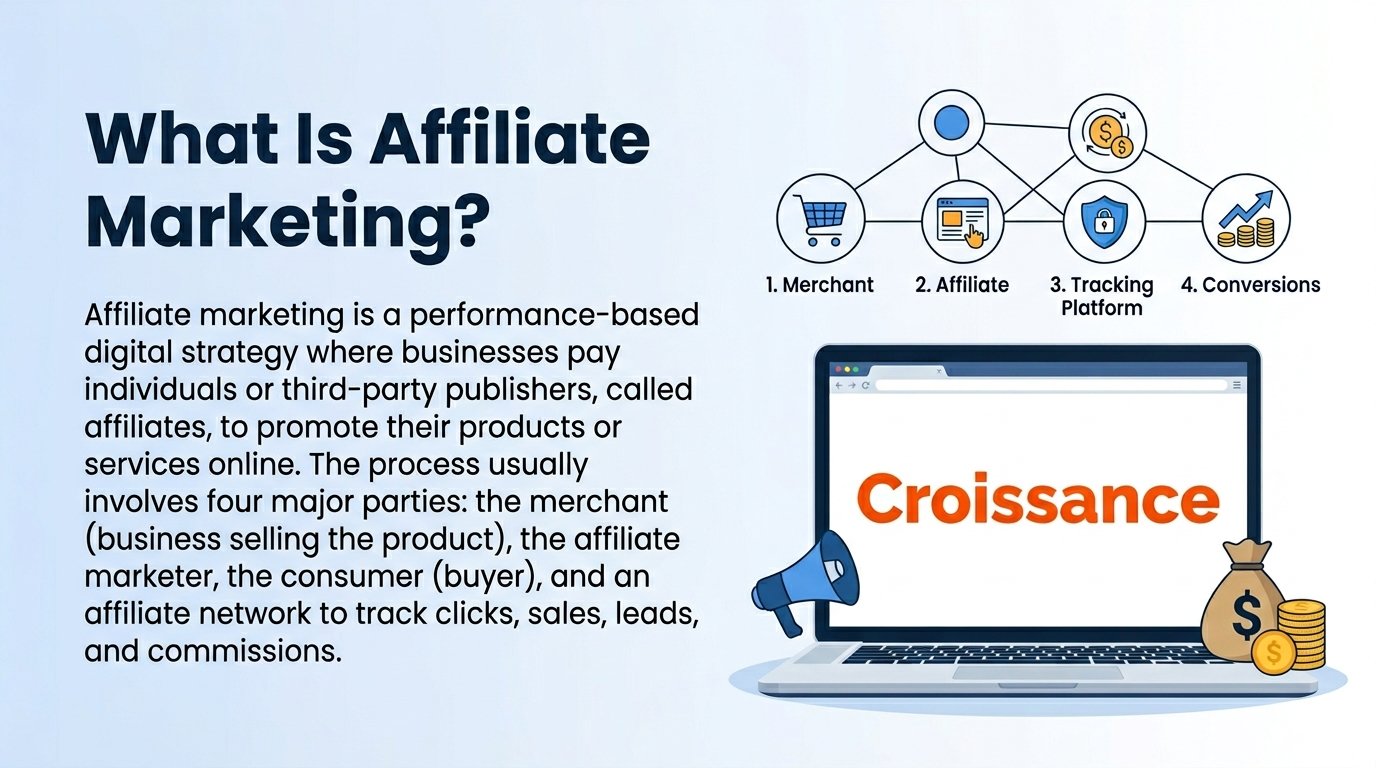
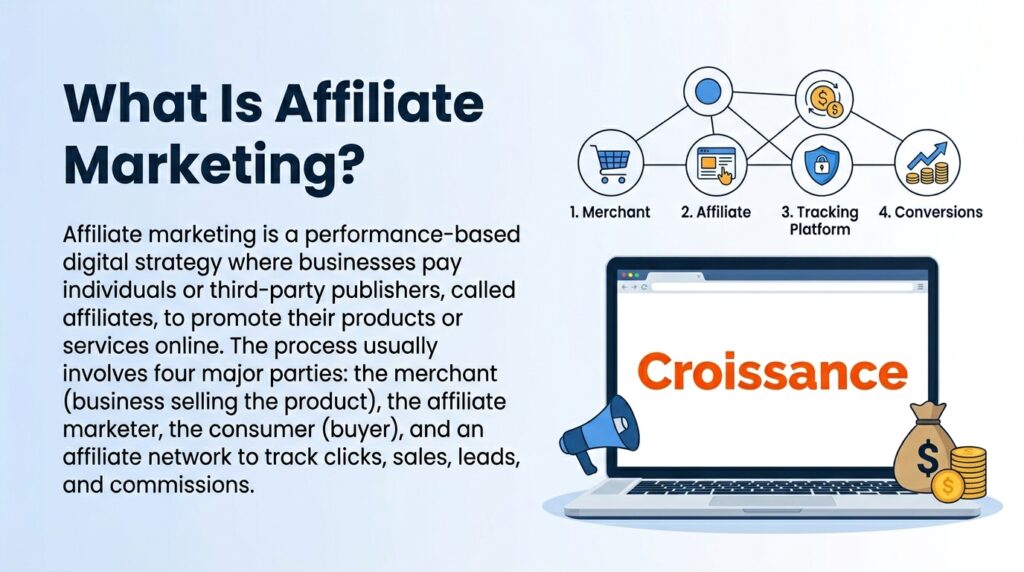
Affiliate marketing is a performance-based digital strategy. Businesses pay individuals or third-party publishers called affiliates. They pay them for generating sales, website traffic or leads.
Affiliates promote products or services online using unique affiliate links. Whenever someone clicks the link and makes a purchase, the affiliate earns a commission.
This makes it a go-to strategy for creators looking to monetize their blogs, entrepreneurs starting an online business and e-commerce brands aiming to scale their sales unlike traditional advertising, businesses only pay when results are generated, making it one of the most cost-effective online marketing methods.
How Does Affiliate Marketing Work?
It involves four major parties working together.
Merchant or Business
The merchant is the company selling products or services.
All in all E-commerce brands, SaaS companies, Online course providers, Travel booking platforms, Finance and investment apps create affiliate programs to attract marketers and content creators who can promote their offerings online.
Affiliate Marketer
The affiliate marketer promotes products through: Blogs, Websites, YouTube channels, Instagram pages, LinkedIn content, Email newsletters, Facebook communities
Many people today search for: “How to become an affiliate marketer”, “Affiliate marketing jobs”, “Best affiliate marketing niches”, “Affiliate agency without investment”, because an affiliate agency offers flexible earning opportunities.
Consumer or Buyer
The consumer clicks the affiliate link and purchases the product or completes a desired action, such as signing up, booking a service, downloading an app or filling a form.
The customer usually pays the same price whether they purchase directly or through an affiliate link.
Affiliate Network or Tracking Platform
Affiliate networks track all – Clicks, Sales, Leads, Commissions, Conversion rates.
Popular affiliate marketing platforms include: Amazon Associates, CJ Affiliate, ShareASale, ClickBank, Impact and Rakuten Advertising. These platforms help businesses and affiliates manage campaigns effectively.
Why Is Affiliate Marketing So Popular?
It has become one of the fastest-growing online business models because it benefits both brands and affiliates.
Benefits for Businesses
Cost-Effective Marketing
Businesses only pay for actual results, such as sales or leads. This improves: Marketing ROI, Customer acquisition efficiency, Sales performance.
Better Brand Awareness
Affiliate marketers help brands reach new audiences across Search engines, Blogs, Social media, YouTube and Email campaigns.
Scalable Growth
Companies can partner with thousands of affiliates globally without building large internal marketing teams.
Increased Online Sales
It drives highly targeted traffic, increasing the chances of conversions and revenue growth.
Benefits of Affiliate Marketing for Beginners
One reason terms like “how to make money online” and “passive income ideas” trend on Google is simple: they’re popular. Almost anyone can try them.
Low Investment Business Model
You can start marketing with: A blog, A smartphone, Social media pages, a YouTube channel. This makes it one of the best online business ideas for beginners.
Passive Income Potential
A well-ranked blog post or YouTube video can generate affiliate commissions for months or even years. This is why it is often linked with Passive income or Remote work opportunities.
Work From Anywhere
Affiliate marketers can work remotely from anywhere in the world.
Unlimited Earning Potential
There is no fixed earning limit. Successful affiliate marketers can scale earnings significantly through SEO, paid advertising, Content marketing and social media growth.
Types of Affiliate Marketing
Affiliate marketing can be divided into three major categories.
| Type | Description | Trust Factor |
|---|---|---|
| Unattached | The affiliate has no personal connection to the product and usually promotes through paid ads. | Low |
| Related | The affiliate promotes products related to their niche or audience. For example a finance creator promoting investment apps, a fitness influencer promoting supplements, a tech blogger promoting gadgets |
Medium |
| Involved | This is the most trusted form. The affiliate personally uses and recommends the product based on real experience. Authenticity often improves audience trust, conversion rates and brand credibility. | High |
Best Channels for Affiliate Marketing
Blogging and SEO
Blogging remains one of the most effective strategies. SEO focused content helps blogs rank on Google for high volume keywords.
Examples include: Best laptops for students, Best skincare products, Best investment apps and Best hosting providers. Search engine optimization is crucial for long-term success.
YouTube Affiliate Marketing
YouTube is one of the fastest-growing channels. Popular content includes: Product reviews, Tutorials, Unboxing videos and Comparison videos. Video marketing builds strong audience trust.
Social Media Affiliate Marketing
Platforms like Instagram, Facebook, Pinterest and LinkedIn help creators promote products to engaged audiences. Short form videos and reels are especially effective today.
Email Marketing
Email marketing allows affiliates to promote offers directly to subscribers and improve conversions.
Best Niches
Some niches consistently generate high search volume and profitability. Popular niches include technology, Finance, health and fitness, beauty and skincare, and travel.
Other niches include online education, software and SaaS, web hosting, cryptocurrency and AI tools. Choosing the right niche is one of the most important decisions for success.
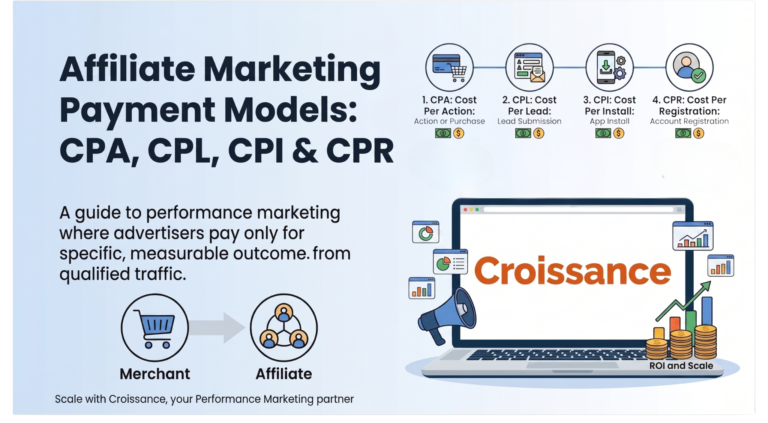
Common Affiliate Marketing Payment Models
Pay Per Sale (PPS)
Affiliates earn commissions when sales occur.
Pay Per Lead (PPL)
Companies pay affiliates for generating leads, registrations or sign-ups.
Pay Per Click (PPC)
Affiliates earn based on traffic and clicks generated.
Challenges in Affiliate Marketing
Although it offers great opportunities, it also has challenges.
High Competition
Popular keywords and niches can be highly competitive.
SEO Algorithm Updates
Google algorithm updates may impact search rankings and traffic.
Building Audience Trust
Long-term success depends on transparency and valuable content.
Dependence on Platforms
Affiliates often depend heavily on Google, Instagram, YouTube and Affiliate networks. Policy changes can affect earnings.
How to Start Affiliate Marketing for Beginners
If you are just starting out, follow these steps:
Step 1: Choose a Profitable Niche
Focus on topics you understand and enjoy.
Step 2: Create a Website or Social Media Presence
Build a platform that lets you create content consistently.
Step 3: Join Affiliate Programs
Apply to trusted affiliate networks and brands.
Step 4: Create SEO Optimized Content
Focus on high search volume keywords and valuable information.
Step 5: Build Trust and Audience Engagement
Honest recommendations help improve long term conversions.
Conclusion
Affiliate marketing has become one of the best ways to grow online businesses and generate passive income in the digital economy.
For businesses, it offers: Better ROI, Scalable customer acquisition and increased online visibility.
For affiliates, it provides: Flexible work opportunities, Low startup costs, Unlimited earning potential.
However, long-term success depends on: Quality content, SEO optimization, Audience trust, Consistency and Ethical promotion.
Whether you are a business owner, content creator, influencer, or beginner looking to make money online, it can be a powerful and profitable opportunity when implemented strategically. As the digital world continues evolving, it is expected to remain one of the strongest pillars of online marketing and performance-driven business growth.
Ready to scale your brand’s growth?
Looking to grow your business through affiliate marketing? Our team at Croissance helps brands build high converting marketing strategies, partner networks and performance-driven campaigns to maximize online growth and revenue.
CroissanceNow Team
The CroissanceNow team runs performance marketing campaigns for apps and brands: CPI, CPA, CPM and CPR, affiliate marketing and programmatic media buying. We share what we learn from real campaigns.